Wildlife protection at the edge of the park.
Ikona is home to elephant, buffalo, lion, giraffe, wildebeest and more. Protecting them is also protecting the people who live beside them.
The foundation of the WMA.
Wildlife and natural resources are the foundation of Ikona. The WMA borders Serengeti National Park, the Ikorongo and Grumeti reserves and the Sasakwa concession, and it sits on the route of the Great Migration.
Long-term protection of the ecosystem is critical to the revenue that funds the villages. Ikona has taken steps to protect both the wildlife and the land it depends on, from patrols to water points in the dry season.
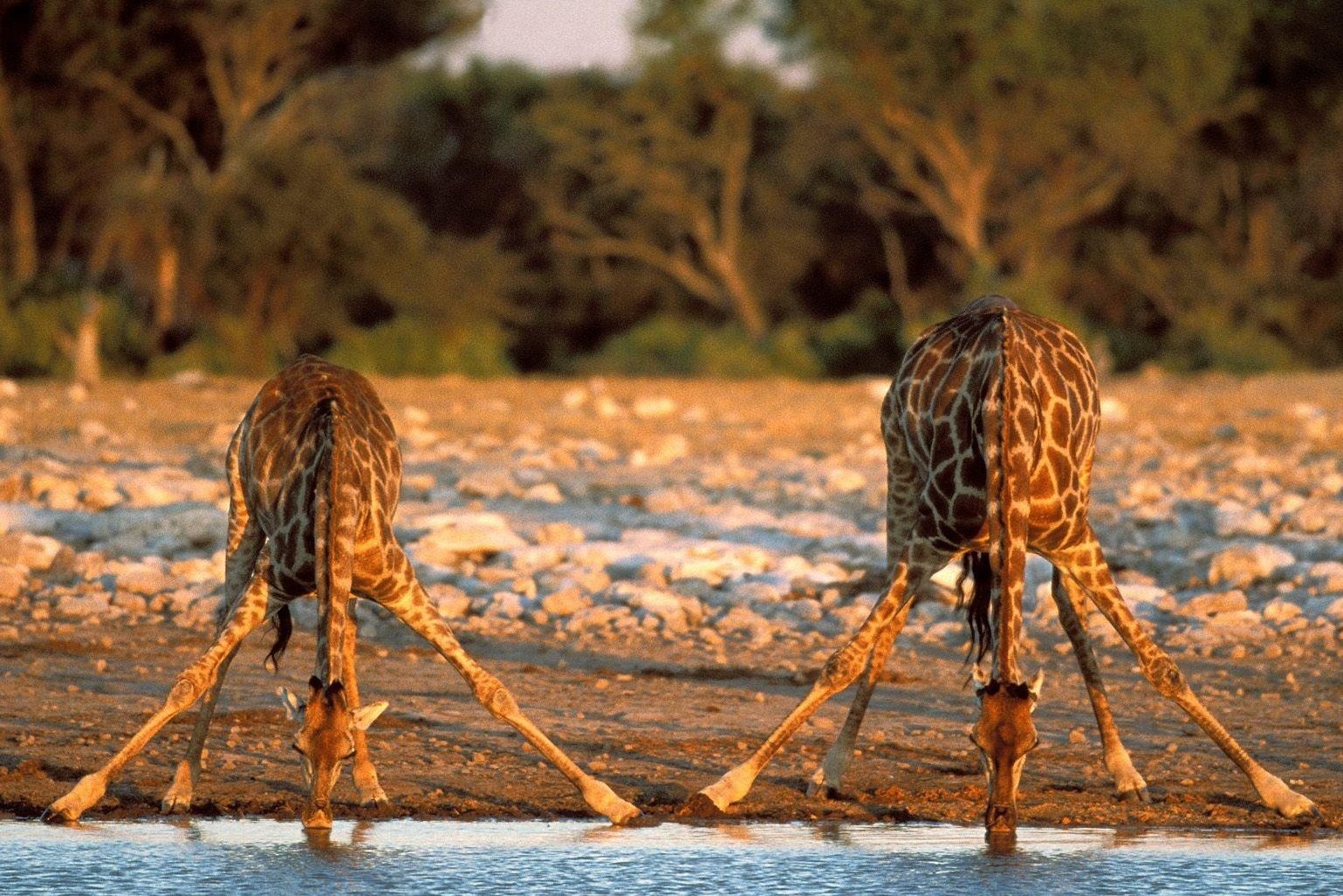
Giraffes at a waterhole in Ikona.
A shared habitat.
The WMA is home to a wide range of species, from the large herds that move through the corridor to the predators and scavengers that follow them.
Species recorded in and around Ikona WMA
The people who patrol it.
Twenty-four village game scouts, two of them women, protect wildlife from people and people from wildlife. They are recruited from the member villages and work from two camps: Twiga in the photographic area to the east, and Kongoni in the western hunting block.
Water in the dry season.
The Serengeti ecosystem is maintained by three rivers: the Mbalageti, the Grumeti and the Mara. The Mbalageti and Grumeti are seasonal and dry out in a drought. The Mara is perennial, and its flow has fallen by 68% since 1972, partly because of deforestation in its catchment in Kenya and water extraction for irrigation.
Ikona builds artificial boreholes and dams, known as rambo in Swahili, to hold water for wildlife through the dry months. In extreme years, the community trucks water in. The dams also serve livestock in the member villages.
drop in Mara River flow since 1972
Rambo: the Swahili word for the dams that hold water through the dry season.
Protect the corridor.
Patrols, water points and research all depend on the same agreement. If you work in conservation, contact the Ikona WMA office.